Bone Densitometry (DXA) in Mumbai – Trusted Assessment of Bone Health
Early Detection. Accurate Diagnosis. Expert Care.
Picture This introduced Western India’s first DXA Bone Densitometry service for evaluating bone mineral density (BMD) at the hip, spine, and radius. This scan is the gold standard for diagnosing osteoporosis, osteopenia, and fracture risk even before symptoms arise.
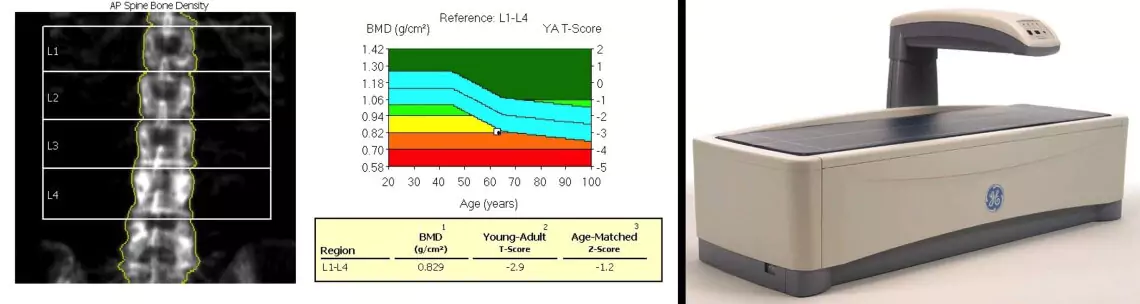
Our in-house GE Lunar Prodigy DXA system provides three-site scans (spine, hip, distal radius) in just ~10 minutes, with same-day reporting (if done before 12 PM) or by the next day. No appointment is required.

What Is DXA Bone Densitometry?
DXA (Dual-Energy X-ray Absorptiometry) uses two X-ray beams at different energy levels to effectively subtract soft tissue signals and accurately measure bone mineral content. It remains the most extensively studied modality for bone density evaluation worldwide.
Results include T-scores (compared to peak adolescent bone density) and Z-scores (matched for age and gender), aiding in osteoporosis diagnosis and risk assessment.
Why Choose Picture This for Your DXA Scan?
- First in Western India to offer DXA imaging established practice and trusted expertise.
- GE Lunar Prodigy: a globally trusted DXA system known for accuracy, efficiency, and ultra-low radiation dose.
- Interpretation by renowned radiologists including Dr. G. R. Jankharia and Dr. Bhavin Jankharia.
- Quick turnaround: scan in 10 minutes; same-day reports if before noon, next day otherwise.
- No appointment required; walk-ins accepted based on availability.
Who Should Consider a DXA Scan?
DXA is recommended for:
- Postmenopausal women (age ≥65) and women ≥50 with risk factors.
- Men ≥70, or those ≥50 with clinical risk factors.
- Individuals taking medications affecting bone (e.g., corticosteroids), or with conditions like rheumatoid arthritis, thyroid disease, liver/renal disease, long-term endocrine disorders.
- Patients with low-trauma fractures or family history of osteoporosis.
- Monitoring response to osteoporosis therapy or metabolic bone treatment.
Understanding the Results
- T-score categories:
Above –1.0 = normal
• –1.0 to –2.5 = osteopenia
• Below –2.5 = osteoporosis - Z-score compares bone density relative to age-controlled norms especially valuable for younger individuals.
- For follow-up scans, the same machine or manufacturer should ideally be used to avoid inter-device variability.
Preparation & Scan Process
- Stop calcium supplements 24 hours before the scan.
- The scan is painless; patient lies supine for ~10 minutes while images of spine, hip, and forearm are captured.
- The machine generates BMD values and body composition data if needed.
Key Benefits & Clinical Value
- Early detection of low bone mass or osteoporosis, enabling preventive treatment.
- Very low radiation exposure (~0.001 mSv), significantly less than standard X-rays.
- Validated quantification of fracture risk using T-score and optional tools like FRAX or Trabecular Bone Score (TBS).
Pricing & Booking Details
DXA scans at Picture This are affordably priced and comparable to other Mumbai centres (typically ₹2,500–₹4,000).
No prior appointment needed; walk-ins accepted but early arrival recommended.
Reports available the same day (if before noon) or the next working day; urgent interpretation can be arranged.